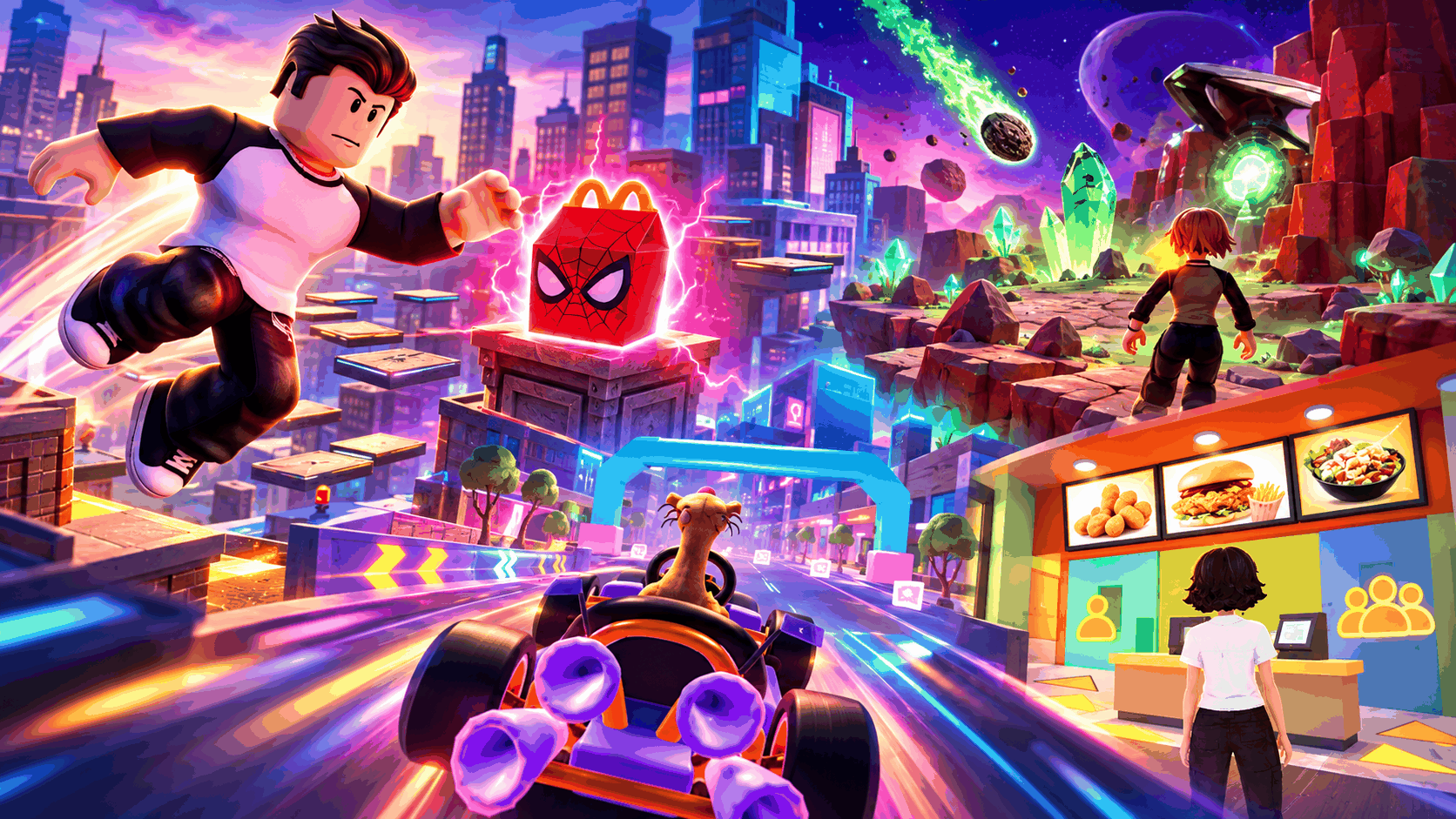
In recent years Roblox has positioned itself as an ideal platform to connect with the new generations, and the brands that bet on it achieved very strong engagement indicators: visits, unique players, playtime and return rate.
Some of the cases developed by Kidscorp together with Mundo Campero, adidas, ChocoWOW, Soprole, Nesquik, Galletas Festival, YPF, Red Bull Bragantino and Bilz & Pap show average sessions of between 2 and 11 minutes and mechanics that connect the digital world with the physical product.
Which brands launched experiences on Roblox and what results did they report?
The table summarizes the cases published by Kidscorp. The figures are those reported in each case and correspond to each specific campaign.
| Brand | Country or region | What was built | Reported result |
|---|---|---|---|
| adidas (Ultraboost Light) | Brazil | Virtual replica of the Avenida Paulista store with an obstacle course and ranking | First Roblox game from a sports brand in Brazil; no performance metrics published |
| Mundo Campero (Pollo Campero) | Central America | Brand experience with a Gamer Day mission and a virtual items store | More than 100,000 visits in under 5 months, more than 60,000 unique players, more than 8 minutes of average session and 12,000 accumulated hours of play |
| ChocoWOW (CMI) | Central America and the Caribbean | Gaming House with four minigames, product barcodes and rankings | First brand experience in the region with its own space on Roblox; more than 9 minutes of average playtime and 28,000 unique sessions |
| Soprole | Chile | Teleport portals and runner-style minigames by product | More than 25,000 impressions on teleports, more than 10,000 unique players, more than 11,000 minigame sessions, 2:30 minutes of average playtime and 90% return rate |
| Nesquik | Chile | La Gran Aventura, a chocolate flavor simulator, active since August 2023 | 9 minutes 44 seconds of average playtime, more than 12,000 unique players and more than 14,000 visits |
| Galletas Festival (Grupo Nutresa) | Colombia | Acid Meteorite World with snack, fashion and game zones | More than 23,000 unique players and more than 33,000 sessions in 3 months; 5 minutes of average playtime; 56.5% of players were between 13 and 17 years old |
| YPF | Argentina | World Cup 2026 Fan Fest on Roblox, with game mechanics, missions and a brand store | More than 45,000 unique players, 3 minutes of average playtime and more than 200 virtual goods purchased |
| Red Bull Bragantino | Brazil | Kick Ball style minigame for Children's Day 2025, with traffic from popular experiences through a teleport portal | 39,000 unique players, 11 minutes of average playtime and more than 680 hours of brand exposure |
| Bilz & Pap | Chile | Bilz & Pap Kart, a multiplayer racing game set in Viña del Mar, part of a 360 campaign that began on TV | 9,000 unique players, 11,000 game sessions and more than 6 minutes of average playtime |
Which formats repeat across these cases?
Several elements appear in more than one case. Virtual goods stores and avatar customization let players take the brand with them. Rankings and contests give players reasons to come back.
Teleports from popular experiences are a way to bring in traffic: in the Festival case, 69.5% of visits arrived that way. And redeemable codes, whether from the product packaging as in ChocoWOW or from content creators as in Festival, connect the experience with the physical world and with social media.
What can be learned from these campaigns?
The first lesson is that playtime matters more than an isolated impression: sessions of several minutes allow a brand exposure that an ad lasting seconds does not offer. The second is that it pays to design a reason to come back, whether a ranking, a staged launch or an exclusive item. The third is to combine traffic entry with creators and teleports, because a new experience does not get discovered on its own. Finally, the age of the audience defines the design: Soprole and Festival targeted teenagers, while other brands seek younger audiences within curated environments.
How do you measure a campaign on Roblox?
The most used indicators are visits, unique players, sessions, average playtime, return rate and code redemption. For campaigns with media buying, estimated reach and frequency by age range are added. It is best to set the indicators before launch and compare against your own baseline, because category averages are not always available.
Frequently asked questions
What playtime can be expected from a brand experience on Roblox?
The cases published by Kidscorp report averages of between 2 and 11 minutes per session, depending on the format and the mechanic. These are results from specific campaigns and not a guarantee for others. The range includes minigames and complete brand experiences.
Do these experiences work for mass consumer brands?
Yes: most of the published cases are from mass consumer brands. There are cases in food and beverages, footwear, snacks, energy and sports in Argentina, Brazil, Chile, Colombia and Central America. Even so, it is best to check local advertising rules for ads aimed at minors.
How do you get started with a first experience?
A common path is to start with a Roblox minigame, single player or multiplayer, which creates a good connection between the brand and players, and then scale to a full experience based on the results.
How do you start your own case?
Kidscorp can help define which format and which indicators fit each brand's goals. The full proposal is on the <a class="cs-link" href="/roblox/">Kidscorp Roblox page</a>.