
We compiled the most frequently asked questions about digital advertising aimed at U18 audiences, to understand how this industry works and what sets it apart from general digital advertising.
What is U18 advertising?
It's digital advertising specifically aimed at children and teenagers under 18, designed to comply with the privacy regulations that apply to that audience (such as COPPA, GDPR-K, LGPD, or ECA Digital) and with formats and inventory suited to each age group. It differs from general digital advertising in that it doesn't rely on behavioral tracking or individual user profiling.
What is a U18 DSP?
A DSP (Demand-Side Platform) is the technology brands and agencies use to buy digital advertising programmatically. A U18 DSP is a DSP built specifically for underage audiences, with inventory curated by age group from the source, contextual targeting instead of profile-based targeting, and compliance built into the U18 regulations from the ground up.
Full article: What Is a DSP Built for U18 Audiences, and How Is It Different From a Generic One?
How is the reach of a campaign aimed at children and teenagers measured?
Real reach isn't the same as impressions. Impressions count how many times an ad was shown, while reach measures how many unique people saw it, removing the overlap between inventories (someone who saw the campaign on YouTube and also in an app is counted once, not twice). For a U18 campaign, this distinction matters more than in a general campaign, because the goal is usually to cover a narrow, well-defined audience rather than maximize volume.
The metrics that go alongside reach are VTR (View Through Rate, the percentage of impressions that led to a video view), CTR (Click Through Rate, the percentage of clicks over impressions), and ER (Engagement Rate, interactions over reach or impressions). None of these replace real reach; each measures something different within the campaign funnel.
What is brand-safe, and how is it different from brand-suitable?
Brand-safe means the environment where an ad appears is safe for a U18 audience: no violent, sexual, or inappropriate content, and classified by age group before the purchase. Brand-suitable goes a step further: that environment, besides being safe, is aligned with a specific brand's values. An environment can be perfectly safe for a minor and still not be the right place for a particular brand.
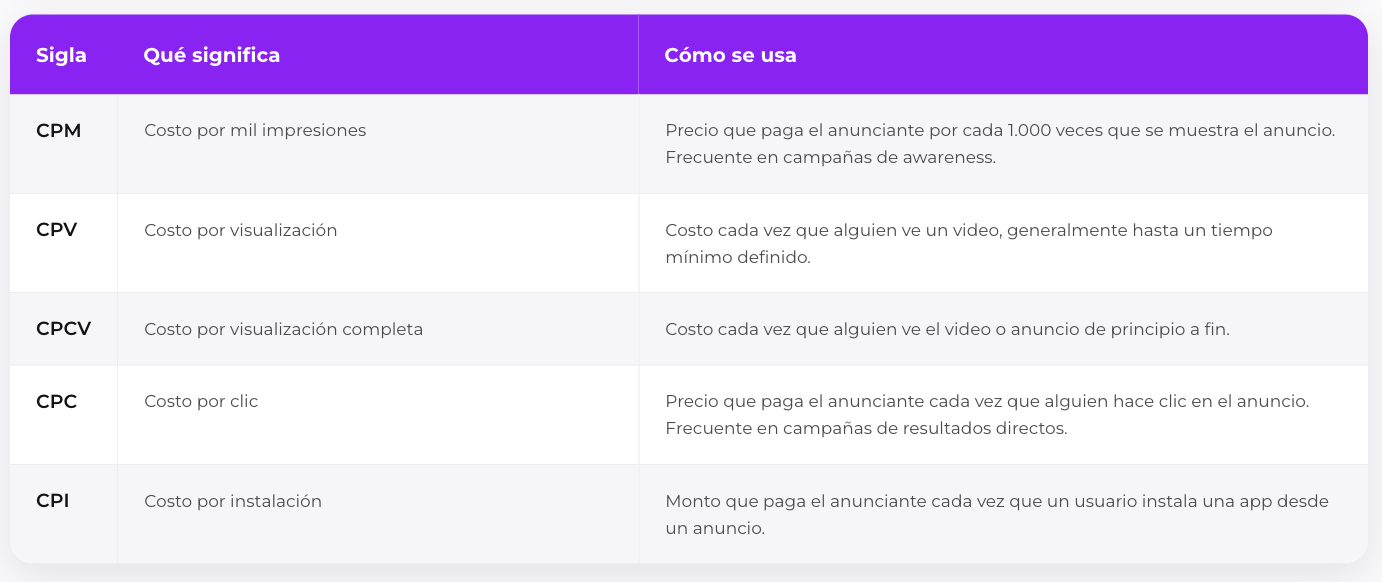
What do CPM, CPV, CPCV, CPC, and CPI mean in an advertising campaign?
What is Campaign Pacing, and why is it key?
Pacing is the distribution of ad spend over time, to avoid overspending early on or exhausting the budget before the campaign ends. It's measured as actual spend divided by expected spend according to the schedule: pacing at 100% means delivery is on track with the plan, above 100% means a faster pace than expected, and below 100% means a slower pace. Well-calibrated pacing ensures the campaign reaches the target audience at the most relevant moments, instead of running out of budget too soon.
How is a U18 audience targeted without using the minor's personal data?
Through contextual targeting: instead of identifying or tracking an individual user, the content, topic, and context where the ad will appear are chosen. A YouTube channel, an app, or a Roblox experience are already classified by age group and topic before any purchase decision exists, and the data behind that classification comes from research panels with verified parental consent, aggregated and anonymized, never from an individual profile of the minor.
Is it legal to advertise to people under 18?
Yes. None of the privacy regulations currently in force around the world (COPPA in the United States, GDPR-K in Europe, LGPD, and ECA Digital in Brazil) prohibit directing advertising at children or teenagers. What they restrict is the handling of the minor's personal data: profiling them, tracking them across sites, or collecting their information without verified parental consent.
Full article: U18 Compliance: What COPPA, GDPR-K, LGPD and ECA Digital Say (and What They Mean for Your Campaign)
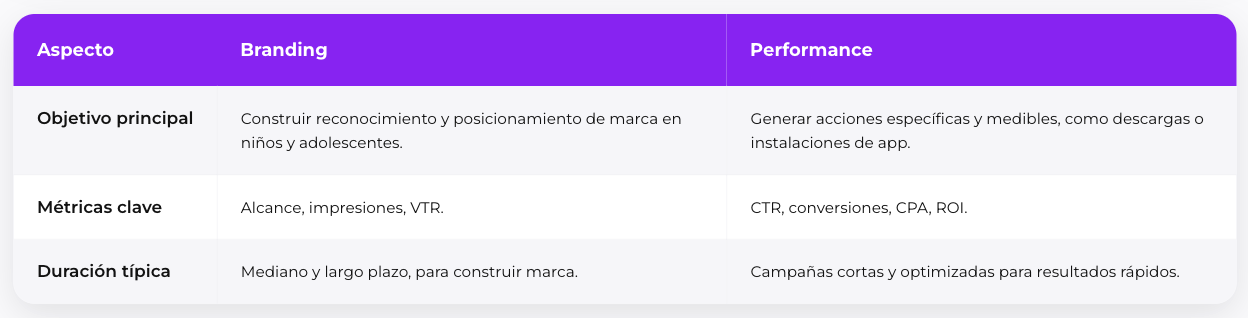
What's the difference between a branding campaign and a performance campaign for U18 audiences?
What advertising formats exist to reach U18 audiences?
Formats are organized by level of interaction and age group: video (preroll, branded video), simple interactive formats (carousels, interactive banners), in-app mini-games (GameAds), and immersive experiences on Roblox. A generic format later adapted for children and teenagers doesn't perform the same as a catalog built from the ground up for each age, with mechanics and complexity that differ between a 6-year-old and a 16-year-old.
Learn more about formats and creative work in our Creative Studio.