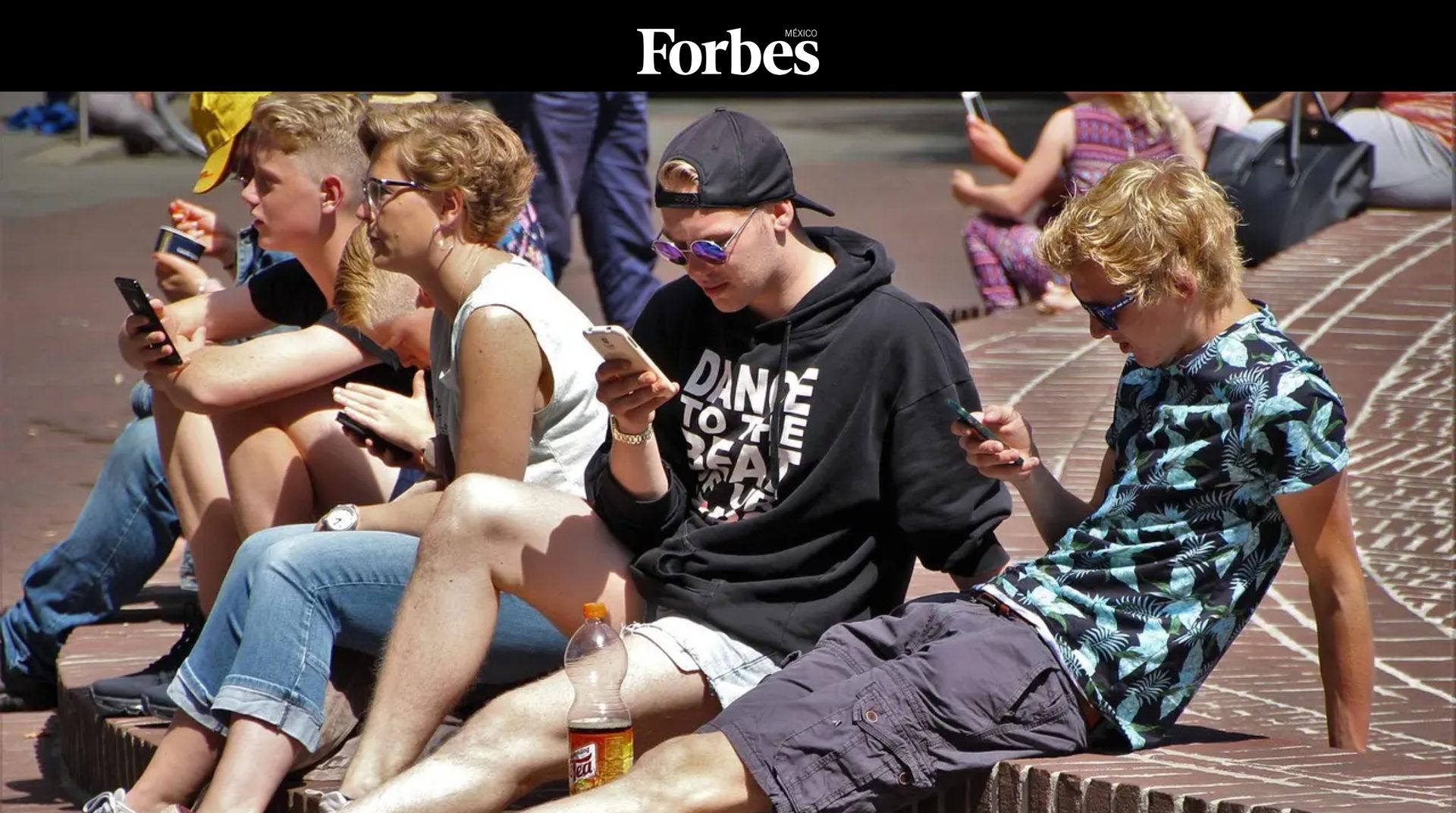
86% of young people identified their favorite ad in digital media, while YouTube stood out as one of their main entertainment platforms.
By: Forbes México.
Mexican teens aged 13 to 18 have consumption habits that combine digital platforms, video games and audiovisual content, a behavior that poses new challenges for brands seeking to connect with this audience.
According to the study Teens: an audience with its own rules, produced by Kidscorp Data & Insights, 86% of teens who recalled an ad said they had seen it in digital media. YouTube ranked second among platforms with 55%, while 37% mentioned free-to-air or pay TV.
The preference for digital media holds across all the segments analyzed and reaches 90% among girls, compared with 83% among boys. By age, 88% of teens aged 13 to 15 identified their favorite ad on digital platforms, a share that drops to 84% among those aged 16 to 18.
Although digital channels have a stronger presence, television keeps a place within teen ad consumption, and the results show that brands can reach this audience across different screens and that their behavior is not limited to a single platform.
YouTube and video games in the daily routine
The study also identifies YouTube as one of teens’ main everyday activities, as 74% of respondents aged 13 to 18 said they use the platform on a typical day.
Among the most watched content, music videos stand out with 59.8%, followed by humor with 46.8% and tutorials with 39.4%. However, video game content created by other players ranks among the top five categories, with 34.9%, while ASMR registers 31.6%.
Video games are also part of their entertainment habits. Roblox leads the preferences with 48%, followed by Minecraft with 46.1%, and further behind come Plants vs. Zombies with 28.7%, FIFA with 27.8% and Call of Duty with 26.7%.
The challenge for brands
Based on these behaviors, the report argues that strategies aimed at teens should consider how they relate to content and platforms, rather than simply adapting campaigns designed for young adults.
The recommendations include working with content creators, developing authentic messages and adapting experiences to mobile device use. The study also highlights the importance of personalization and privacy, as well as avoiding deceptive advertising practices or repeated exposure to the same ad.
The proposal covers different formats, from video ads to interactive ads, minigames and brand experiences within video game platforms, although the opportunities also vary by industry.
For example, in the beauty sector, 27.5% of teens reported personally using makeup; in education, 28.7% watch educational videos on YouTube. In telecommunications, 50% of those who play mainly use their cell phone, while in the digital finance space, 58.9% make purchases inside video games.
Taken together, the data show that understanding teens’ digital habits, interests and ways of interacting is a relevant element when designing advertising strategies.