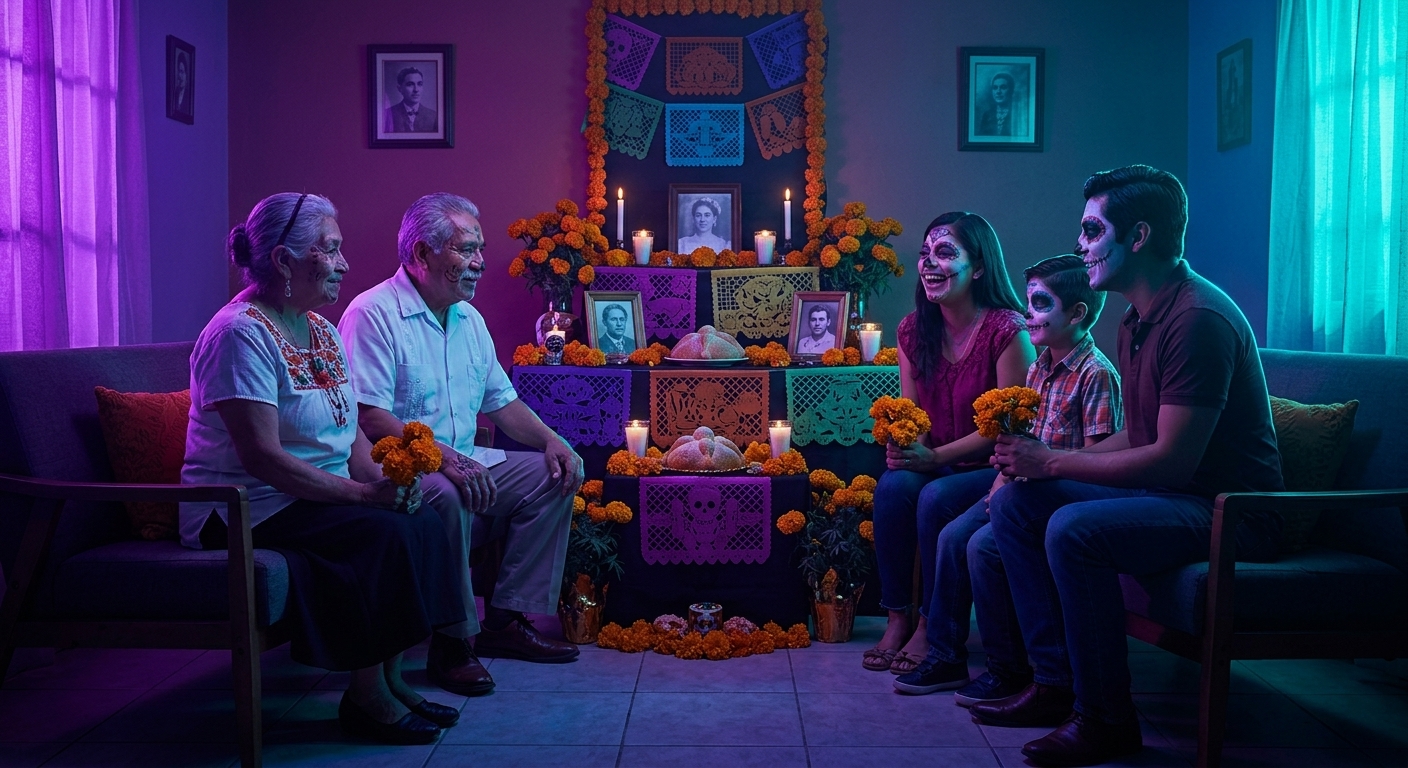
September marks the start of the most important commercial season of the year in Mexico, and Marketing4Ecommerce México highlighted just how much weight Day of the Dead and Halloween will carry over the next two months. According to Kidscorp's report "The Longest Season of the Year in Mexico," the two dates combined will generate spending of more than 71,500 million pesos: close to 49,500 million tied to Day of the Dead and around 22,000 million to Halloween.
Children and teens will be at the center of the season. The celebration is expected to reach more than 22.5 million children and teens this year, in one of the family traditions where brands most look to involve younger audiences.
The fastest-growing categories
From October 30 to November 2, four days will concentrate most of the celebrations, from costumes to candy to setting up home altars. According to Kidscorp's radar, 69% of children will spend those days dressing up, 52% decorating, 48% eating candy, 39% going out to ask for it, and 34% helping set up the family altar.
That behavior shows up in spending too: costumes lead growth at 350%, followed by table chocolate at 68% and candy at 56%.
September, the key month to make the shopping list
The report points out that nearly half of families, 49%, start planning their purchases in September, well ahead of the actual celebration. Brands that wait until October to launch their campaigns arrive late. The family decision process can be broken into three stages: anticipation, from September 21 to October 11, when it pays to get on the radar before a final decision is made; decision, from October 12 to 25, when the goal shifts to convincing parents to become the final pick; and celebration, from October 26 to November 2, the stretch where all that's left is to be part of the festivities.
Four audiences, one purchase decision
Kidscorp's data shows costume choice shifts with age. For kids 3 to 5, parents choose. For kids 7 to 9, the choice reflects the identity they're building around their own tastes. Preteens lean toward belonging to a group, and teens 13 to 17 look for costumes that project authority.
Despite those differences, one pattern holds steady: 60.3% of purchases happen with both parents and kids present, confirming that campaigns this season need to speak to children and teens as much as to the adult who ultimately pays.
Read the original coverage at Marketing4Ecommerce México.