In the world of childhood and adolescence, play is a fundamental part of development. Children and teenagers have different ways of having fun, and these activities can vary by age and gender.
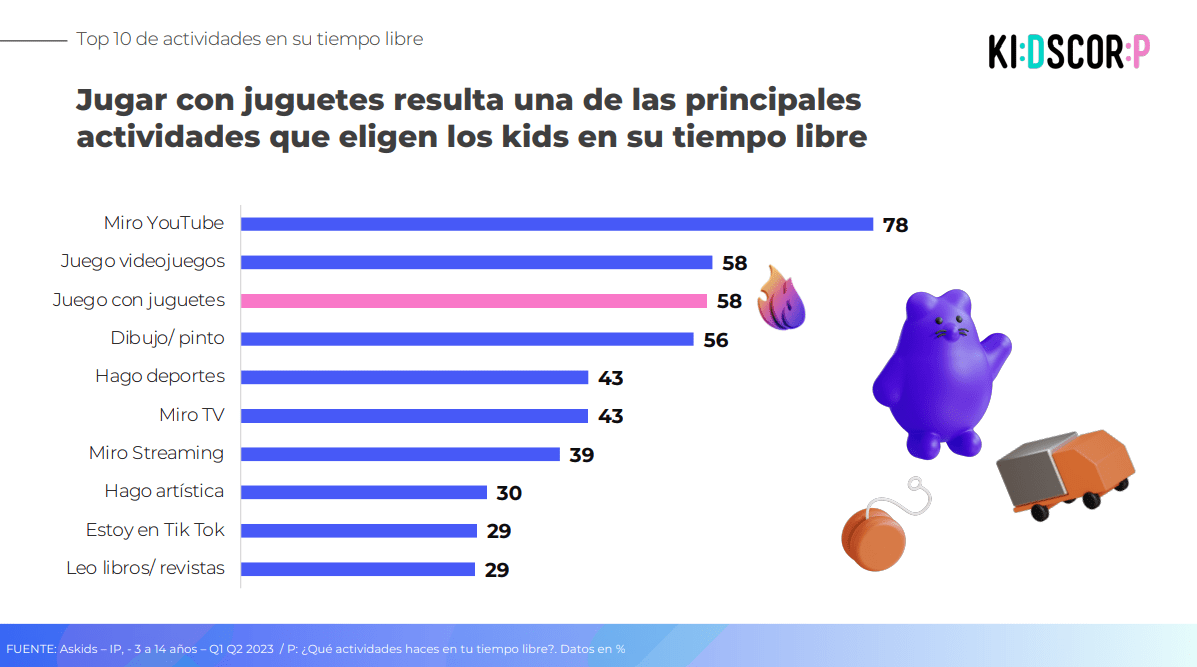
One of the main sources of entertainment for children and teenagers is playing with toys. According to Askids, the data & insights platform for the U18 segment, 58% of boys and girls in Latin America, aged 3 to 14, enjoy this activity.
When it comes to entertainment more broadly, 58% of kids & teens enjoy video games, reflecting technology's growing influence. Additionally, 56% engage in drawing or painting, 43% participate in sports, and 43% watch television.
Construction and Vehicle Toys Lead the Way
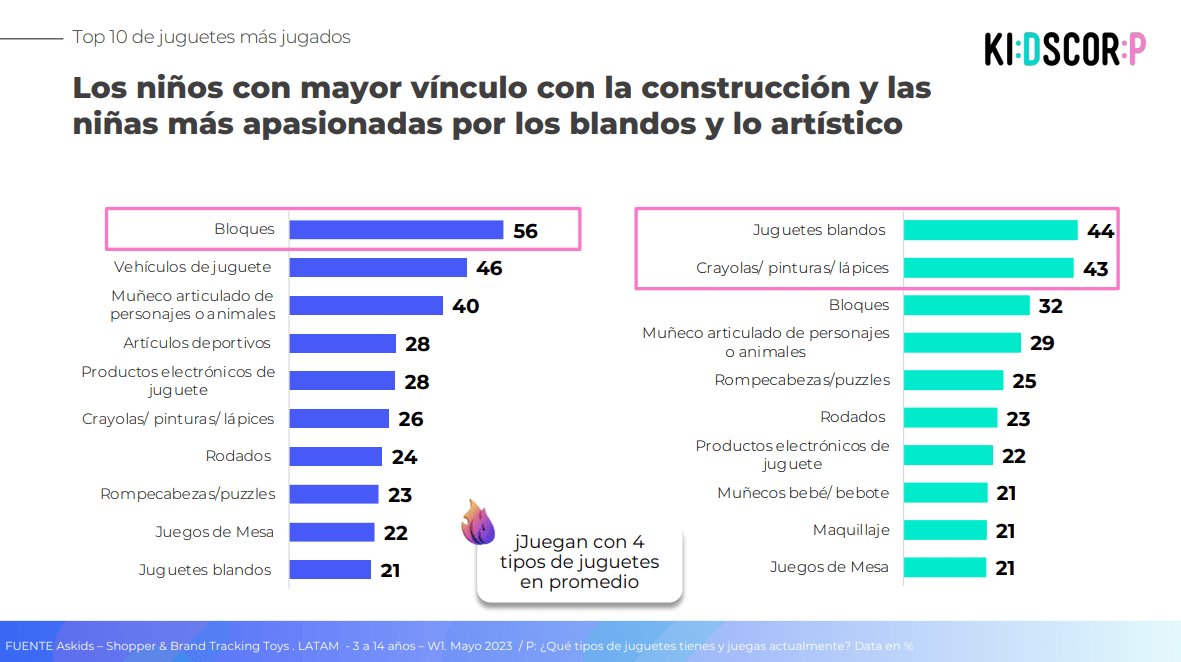
Construction toys hold particularly strong appeal among Latin American children. 56% of children play with building blocks, and 46% have fun with toy vehicles. About 40% enjoy articulated dolls, and 28% prefer sports and electronic toys.
Girls Show Distinct Preferences
The data reveals meaningful differences by gender. 44% of girls enjoy playing with soft toys, while 43% use crayons, paints, and pencils for creative activities. Approximately 32% play with blocks, 29% with articulated dolls, and 25% with puzzles.
How Play Evolves With Age
Age trends emerge clearly across play preferences. Boys aged 11–13 play with toys more than girls in the same age range. Building blocks remain consistently popular across age groups, 46% for ages 3–5 and stable through ages 6–10.
As children mature, from the age of 9, playing with toys begins to gradually decrease, and the bond with technology grows. However, many teens continue collecting toys, showing that the connection to play endures well into adolescence.
These insights highlight why understanding age and gender dynamics is essential for brands looking to connect meaningfully with young audiences in Latin America. Play remains a powerful vehicle for creativity, learning, and brand engagement throughout childhood.