
More than big kids or small adults: teens have their own consumption logic. Understanding it is the first step to building campaigns that make an impact in Beauty, Education, Telco and Fintech.
The challenge
The average media plan treats this audience as an extension of the young adult: same channel, same format, just a tone adjustment.
Only 4 in 10 saw their favorite ad offline.
That reach makes an impact, but it does not always mean something: the opportunity is not about budget, it is about terrain.
Four traits that shape everything else
Before thinking about channels or formats, there are four behaviors that explain much of the rest.
| Data | Trait | What it means |
|---|---|---|
| 74% | YouTube is their routine | Watches YouTube on any given day: it is their number one activity, ahead of playing and chatting. |
| 50% | Mobile-first | Plays mainly on the phone, twice as much as on console. It is not a preference, it is infrastructure. |
| 78% | Watches more than they play | Watches gaming content on YouTube. Every player is also an audience member. |
| 59% | Spends inside the game | Buys within games or apps: the spending already happens inside the experience. |
A circuit, not a platform
This audience does not live on a single channel: it moves through a circuit where what they watch, what they play and where the brand reaches them happen almost at the same time. On YouTube there is no dominant format: music videos lead with 59.8%, but humor (46.8%) and tutorials (39.4%) fall in the same consumption range. In gaming, Roblox (48.0%) and Minecraft (46.1%) are tied at the top, with Plants vs Zombies (28.7%) rounding out the podium. And 86.2% of those who remember their favorite ad saw it on online media, of whom 63.6% saw it specifically on YouTube: virtual worlds and content are not an experiment, they are the whole circuit.
Three truths that change the brief
They repeat campaign after campaign and shape any brief written for this audience.
- 01. Attention has to be earned. Teens do not consume advertising on the way to something else: they consume the environment. Interrupting that moment means losing your turn.
- 02. Playing, watching and sharing are a single behavior. Roblox, YouTube and the WhatsApp group are three moments of the same journey.
- 03. Authenticity is something they care about. They spot disguised advertising instantly. The creator has the voice, the brand provides the context: that order is the one that works.
Not all formats do the same thing. Nor at the same time.
The lower levels buy reach. The upper levels buy time. They do not compete with each other: a teen who watched the video did not live the experience.
The scale reads from lowest to highest depth: each level keeps the reach of the previous one and adds immersion.
| Level | Format | Type of experience |
|---|---|---|
| 04 | Brand experiences | Total immersion |
| 03 | Roblox minigames | Active play |
| 02 | Game Ads | Light interaction |
| 01 | Video | View only |
| Booster | AInfluencers | Social amplification, cuts across all levels. |
Booster, not just another level: AInfluencers amplifies all four levels at the same time through social amplification, without replacing any of them.
A campaign that stays at the bottom reaches people without recall. One that starts at the top has depth without scale.
Five non-negotiable rules for teens aged 13 to 18
They do not depend on the category or the budget: they are the minimum floor for a piece to work with this audience.
- 01. Creators speak, the brand accompanies. The corporate message is discarded before it is processed.
- 02. Authenticity or nothing. Imitating youth slang without a real basis generates immediate rejection.
- 03. Real personalization. It is not choosing between three avatars: it is having real control over the experience.
- 04. Design for one thumb. One-handed mobile use: everything else adds friction.
- 05. Privacy as a starting point. It is not an attribute you communicate: it is the condition for the piece to exist.
Zero deceptive patterns and no chasing the user with the same ad: in this segment, ethical design does not limit creativity, it is what separates the campaign that runs from the one that gets blocked.
The opportunity, industry by industry
The same logic applies differently in each industry. This is how it already translates into results, in Beauty, Education, Telco and Fintech.

Beauty
The category lives on demonstration: teens see it where the brand does not control the message, in tutorials, reviews and creators, and the ad that describes the product arrives late. They use more than they buy: 27.5% have used makeup personally, and 17.7% of parents bought cosmetics online for their son or daughter. The idea: let them try it, not just look at it.
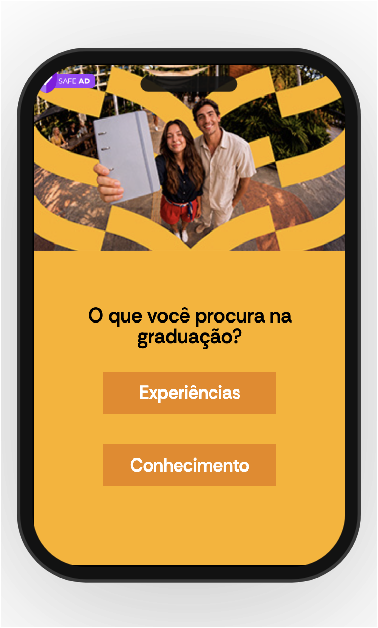
Education
It competes for the same minute as Roblox and YouTube: any extra friction reads as a chore, not as a product. 28.7% watch educational videos on YouTube and 77.6% consume gaming content on YouTube: they already know how to learn complex mechanics on their own, by trial and error. The idea: a minigame where you advance by levels, without anything being explained beforehand.
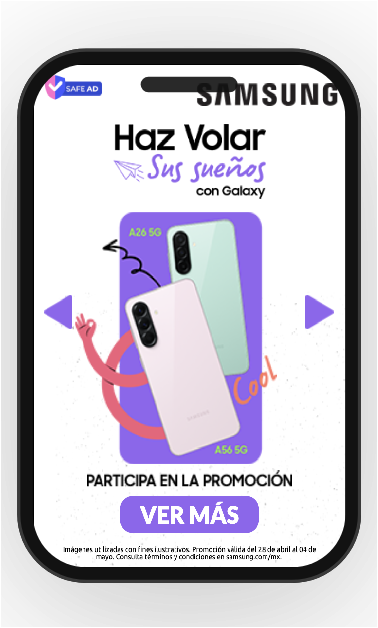
Telco
The category sells a plan to someone who does not sign the contract: the teen does not choose the line, but defines how much data, for which apps and at what speed. For them, the plan is the condition for existing socially, not a service. 50% of those who play do so mainly on a phone, and 86.3% use WhatsApp. The idea: make data the prize.
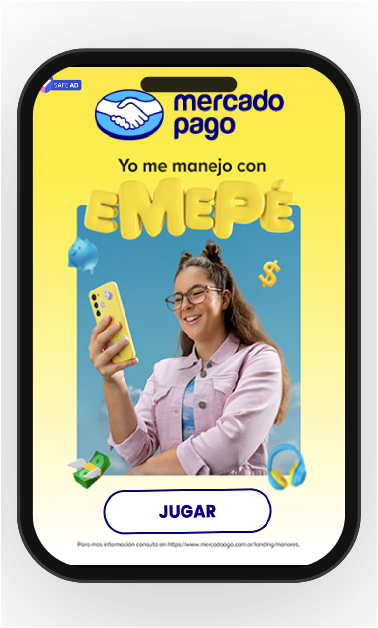
Fintech
The category assumes the teen is just starting out as a financial user. That is not the case: they are already a digital financial user. 58.9% buy inside games and 57.5% spend there without having bought a video game in three months: the only environment that taught them to spend digitally was the game, not the bank. The idea: earn, save and decide.
Conclusion
Every brand with a product designed for teens competes for the same moment: an audience that lives in its own circuit, that tells authenticity from imposture instantly and that rewards whoever builds a genuine place there, not whoever forces their way in. The opportunity does not depend on the size of the budget: it depends on how well you understand who you are talking to. That advantage is still available, and it shrinks with each quarter that passes.