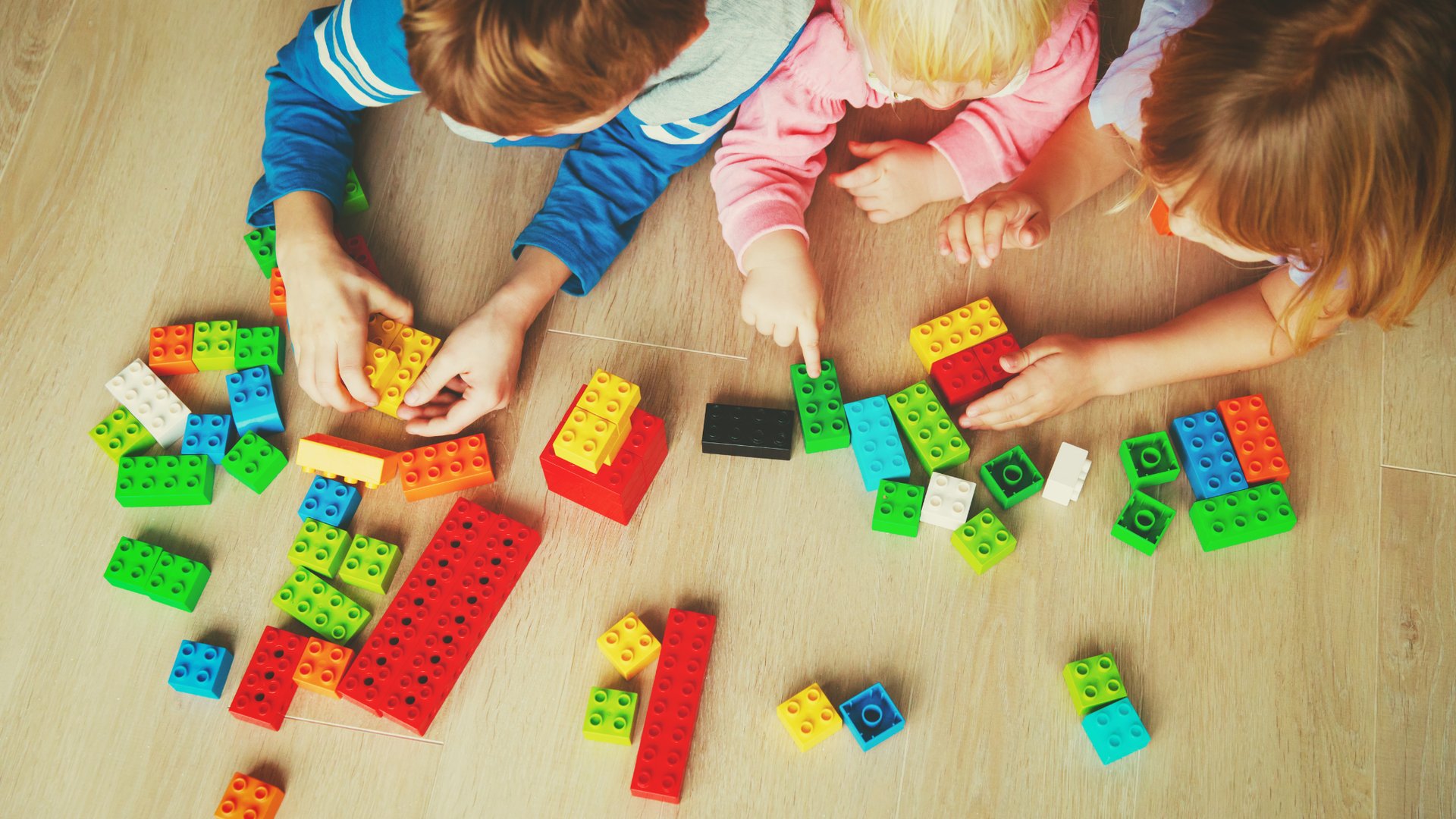
In Mexico's toy industry, the brand holds a leadership position. Kidscorp's Tracking Toys 2024 study shows it reaches 98% awareness among girls. Almost all of them know it. But being known didn't mean being chosen.
Actual product penetration revealed a gender gap:
- 64% of boys own sets from the brand.
- 52% of girls own them.
Behind that difference lies a long-standing stereotype: construction as male territory. The brand was on every girl's mind, but it didn't feel like an invitation to play. The stereotype thus became a business problem as well as a cultural one.
The real problem: visibility without cultural relevance
The challenge wasn't amplifying messages or increasing frequency. What had to change was what the brand meant to girls.
The strategic question wasn't "how do we reach more girls?". It was this: how do we make the brand feel like a tool for self-expression and empowerment for them?
There were two objectives:
- Establish a new cultural meaning: break stereotypes and reposition construction as a space where girls see themselves.
- Impact the business: turn emotional affinity into purchase intent and the desire to play.
A massive inventory buy wouldn't solve this. There were two conditions:
- Brand safety: avoid appearing in generic or unsafe contexts that would weaken the empowerment message.
- Understanding the audience: they weren't "girls aged 6–12", but girls in self-expression mode, interested in music, creativity, entertainment and cultural role models.
This gave rise to a cultural empowerment platform where girls don't just watch creativity, they see themselves in it. The message didn't aim to sell blocks. It aimed to celebrate the identity of creators, and it only worked if the media ecosystem supported it.
Kidscorp's strategy: targeting by affinity and context, not declared age
Using Kidscorp's proprietary data on U18 audiences, we designed a model based on affinity and context, not on declared age.
- The channel as part of the message: YouTube and In-App/Gaming environments were chosen because girls consume content as an extension of their identity, not just as entertainment.
- Targeting by passion points: music, entertainment, creativity and cultural role models, to ensure emotional receptiveness.
- Safe, contextual repetition: Kidscorp's technology guaranteed 100% Brand Safe environments, so the message could build consistently and without friction.
The focus was sustained affinity, not frequency or demographic targeting. The goal was to drive the campaign as a cultural platform that empowers real girls, in real contexts.
Results: cultural change became measurable
Brand performance (Post Test)
The Post Test confirmed that the impact went beyond awareness:
- Ad recall: 33%, above the category benchmark (22%)
- 95% said: "Building blocks are for girls too"
- 87% purchase intent after seeing the ad
- 88% wanted to play and create
- Brand rejuvenation: Modern 94%, Creative 93%, "Made for me" 86%
Media performance
- 80.3% VTR: 8 out of 10 ads were watched to the end, validating the fit between message and context.
- Impressions on the right target, within 100% Brand Safe environments.
Conclusion: data that understands identities, not just audiences
Efficiency isn't about reaching more people, but about being relevant to the ones who matter. This strategy sought meaning instead of volume. It built identity instead of buying impressions.
Kidscorp didn't help the brand talk to girls. It helped the brand become part of who they want to be. A brand that achieves that doesn't just sell more, it becomes culturally indispensable.